
Not every day one meets a person who travels without money and looks for a place to stay amongst strangers. When people get to talk to me their amazed minds produce all types of different questions. The question of food and a place to stay are two primary topics that puzzle people the most. Since my way of travelling is rather unusual, I perceive it my duty to satisfy their curiosity and answer their questions to the best of my ability.
- What does the process of looking for a place to stay look like
- How long does it take to find a place to stay
- Reading people is the key
- What do I say exactly
- How do people react to me looking for a place to stay
- Is it safe?
- My personal hosting experiences
- Sleeping outside
- Experiences of the others
- The Most Hospitable Countries
- The Least Hospitable Countries
- What makes such journey remarkable
What does the process of looking for a place to stay look like
When I wake up in the morning, normally I do not know where I am going to sleep that night. Depending on my direction and the quality of the roads I choose a specific destination and hitchhike towards it. Therefore, studying the map and planning in advance is crucial to the entire process. Generally, I try to arrive to the place before sunset, which gives more time and allows greater flexibility.
The method is perfectly simple – I approach strangers in the street or knock on doors and ask them whether they can host me. The strategy of looking for a place to stay highly depends on the size of the chosen location. In bigger cities and towns I approach strangers in the street; while in smaller towns and villages I knock on doors.
When looking for a host in the streets, I generally aim to be in busier parts of the city, like the city centre. Also, a lot of big cities have pedestrian streets filled with bars and restaurants. Those places are oftentimes full of people regardless of the time of the year. Parks are a fine option as well, especially in summer.
Usually I walk around in the area, quietly observe people and look for the ‘right’ person. Once I see one, I approach and ask the question.
Knocking on doors in some way is simpler, but can be tricky. It is possible to imagine what kind of person lives in the house based on pure looks of it. But, ultimately, I do not know who lives in the house. When the person comes out, I already know what their response would be. And with some of them the encounters are not quite pleasant.
How long does it take to find a place to stay
The answer to this question depends on two important aspects.
Part of the world. The country and the particular part of this country highly affect the search for a place to stay. Based on historical, cultural and economic development different countries generate societies with a distinct way of understanding our world. And some nations are simply more welcoming and hospitable than the others.
I have also been to countries where people either did not care at all, or openly expressed hostility towards foreigners. Those countries traumatised me for good.
My spirits. I noticed that whenever I am more animate, clearer in my speech and on point, people tend to react more favourably. In the beginning of my journey when I was less experienced, I would oftentimes feel desperation and discouragement after being rejected. People can easily sense that. Thus, finding a host would take more time.
There have been number of instances when the very first person I have asked welcomed me into their home. In this case the entire process takes up to 10 – 15 minutes, depending on how quickly I met this person.
On the other side of the spectrum, my record time of looking for a host is 10 hours. It was Friday night, the street were filled with people even at three in the morning. And since I had nowhere to go, I decided to keep pushing. Needless to say, I failed to find anything.
All in all, in my estimation looking for a place stay in optimal conditions takes about half an hour on average.
Reading people is the key
I always argue the point that the saying ”you never know” is awfully wrong. It was generated by lazy people for lazy people as an excuse for not thinking. Asking questions and seeking the answers, believe it or not, can do some magic. Why is the person dressed like this, look like this, talk or walk like this, why would this person host me, etc. Answers to these questions illustrate reasons and motivations behind actions of people.
I understand, if it sounds confusing, but our brains are already programmed to operate this way. Imagine a teenage male in the street who is wearing a hoodie, keeps hands in his pockets, head down. He looks around nervously, like he is waiting for somebody or something and struggles to stand still. Would it be so wrong to conceive that he could be up to something? Would it be an overkill to avoid him by crossing the street?

Take Johnny Depp, for example. He seems like a chill and a rather relaxed dude, who just gets things done. He has got his own individual style, which makes him stand out in the crowd. If he was not a world-class celebrity, but just a normal guy in streets of some German or French city, I would most certainly approach him.
On another hand check out the Wikipedia article on Zhenhao Zou – Chinese PhD student who drugged and raped dozens of women in his own apartment in London. When I look in his eyes, I see darkness, and behind them a deeply troubled mind. I would never approach this guy in the street. And most certainly never follow him if he was to invite.
What do I say exactly
Normally when I see the person whom I wish to ask, I approach and say: ”Excuse me, may I ask you a question?” If a person welcomes the question I proceed.
In the beginning of my journey I adopted the method of the person who taught me the craft. I walked around with a cardboard sign that had the question written on it.
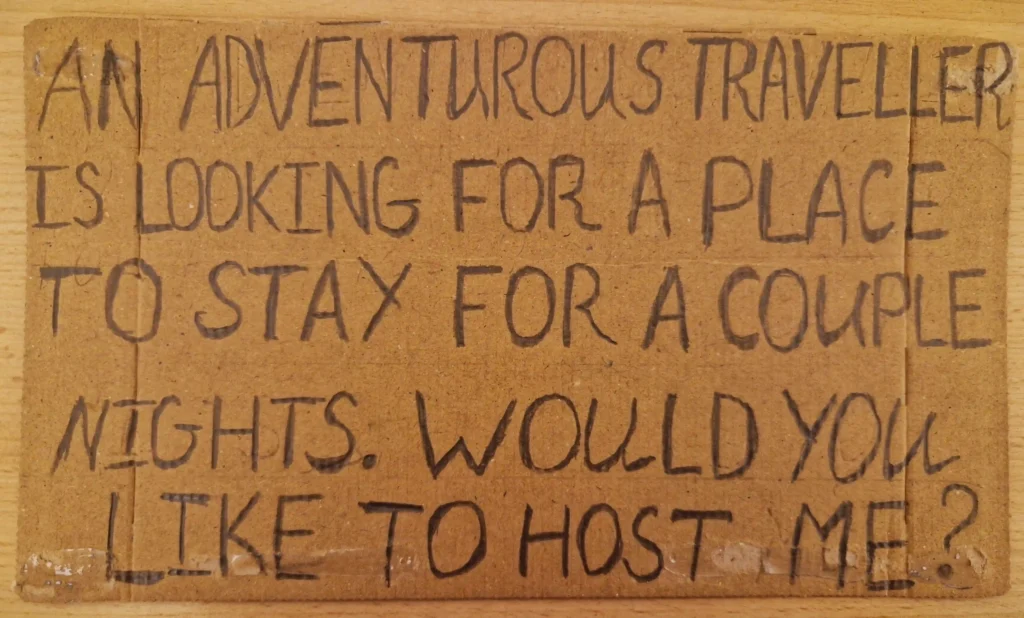
The question on the cardboard is concise and on point. It captures person’s full attention and enables communication even in noisy bars and parts of the street where they would have a trouble of hearing me. But the downside of this method is that there is a stigma around cardboard. They are associated with a homeless person. Therefore, people sometimes would assume that I was asking some money without even reading the sign.
With time I noticed that people become more engaged in the conversation if I asked verbally. I adjusted and, as of now, I primarily speak with them. The only exceptions are the countries where English proficiency is low and I do not speak their language. In this case I have a translated sign prepared, which I show for them to read.
How do people react to me looking for a place to stay
Many people mistakenly assume that it is virtually impossible to ”convince” someone to let you into their house. It is true that the largest chunk of population would never do such a thing. This is why looking for a place to stay is indeed an intricate process. I am looking for that tiny percentage of the population that could be thoughtful or adventurous enough to do it.
I imagine that such question can arouse a rainbow of emotions in different people. More often than not they try to get out of the situation as soon as possible by concocting not very believable lies and excuses.
Once a woman in Sweden told me that her house was not as big as it actually seemed on the outside; on a couple occasions person blamed it all on their dog, that it would be very nervous in presence of a stranger; ‘We have other plans for tonight’, – said a man at 11 o’clock in the evening.
One woman in Germany whose house I knocked on grew indignant upon hearing my question and said: ”How you could you possibly ask someone for something like this?!”
A man in Sweden whose neighbours pointed at his house and advised to ask him, got very suspicious and began questioning me, wondering how and why I chose his house. It turned out that he was a police officer. After I cleared the air by explaining everything, he welcomed me in.
A family in Uruguay who hosted me over Easter holidays thanked me for choosing them in the street and, thus, delivering a rather unique experience. In a similar way on a couple other occasions person said something along the lines that they felt honoured to be chosen.
Is It Safe
YES!
This way of securing an accommodation for oneself is probably one of the safest ways of doing it.
I understand how it might seem implausible to some. Society tells us quite the opposite all our lives. But that is mainly because humans themselves do not understand the human nature properly.
Even though, humans have turned into egoistic, self-centred, self-obsessed, narcissistic little poops, solidarity and care for the other, are the fundamentals of humanity. People who are more inclined to do such an unconventional thing as hosting a stranger are generally characterised by the latter qualities.
They also tend to do it out of emotional investment. Do you think a man who offered me a place to stay, and mentioned that I remind him of his daughter, would rape me? Or a single woman, who was so glad to have a company that evening, would rob me? A family that gladly welcomed me in would take my passport away and sell me to sex traffickers?
If such scenarios do not make any sense, probably it is just your imagination.
What do people even imagine when they say ‘dangerous’?
I once turned down an invitation in Poland because I did not like the couple that was extending it. I observed the woman and noticed that she had very bad teeth, poor skin quality, and messy hair. The men, on the other hand, looked better, but had very cold, expressionless eyes. Given my unfavourable impression of them I chose to avoid them.
Because I could conceit that they invited me with a motivation that would be detrimental to me.
My Personal Hosting Experience
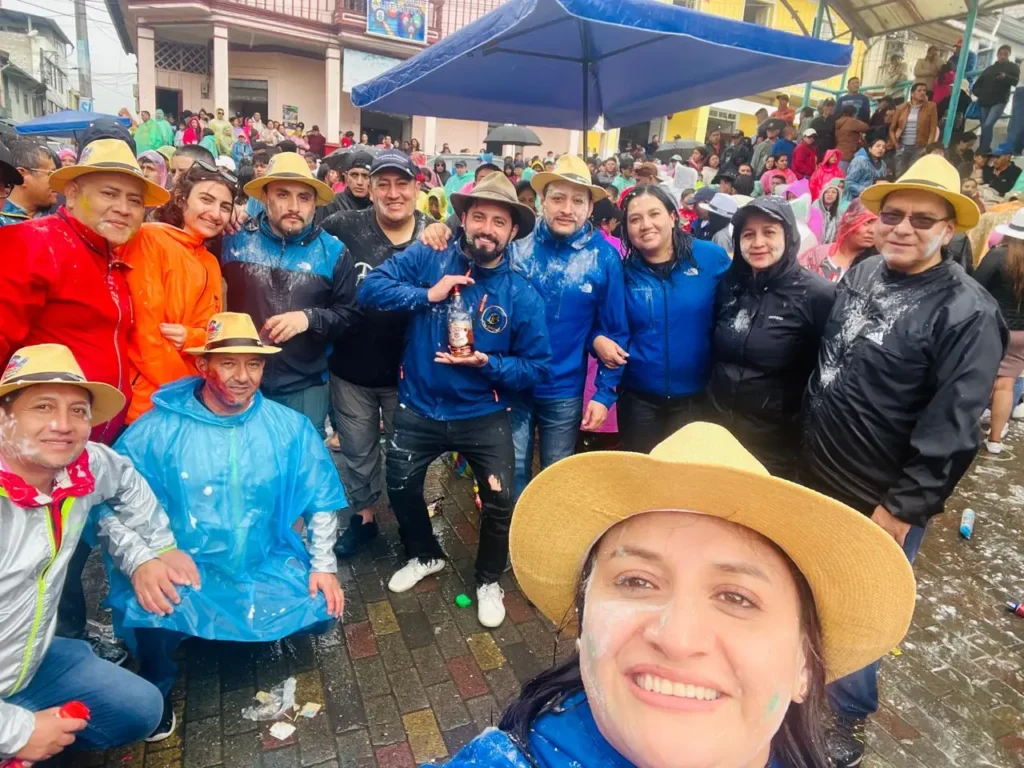
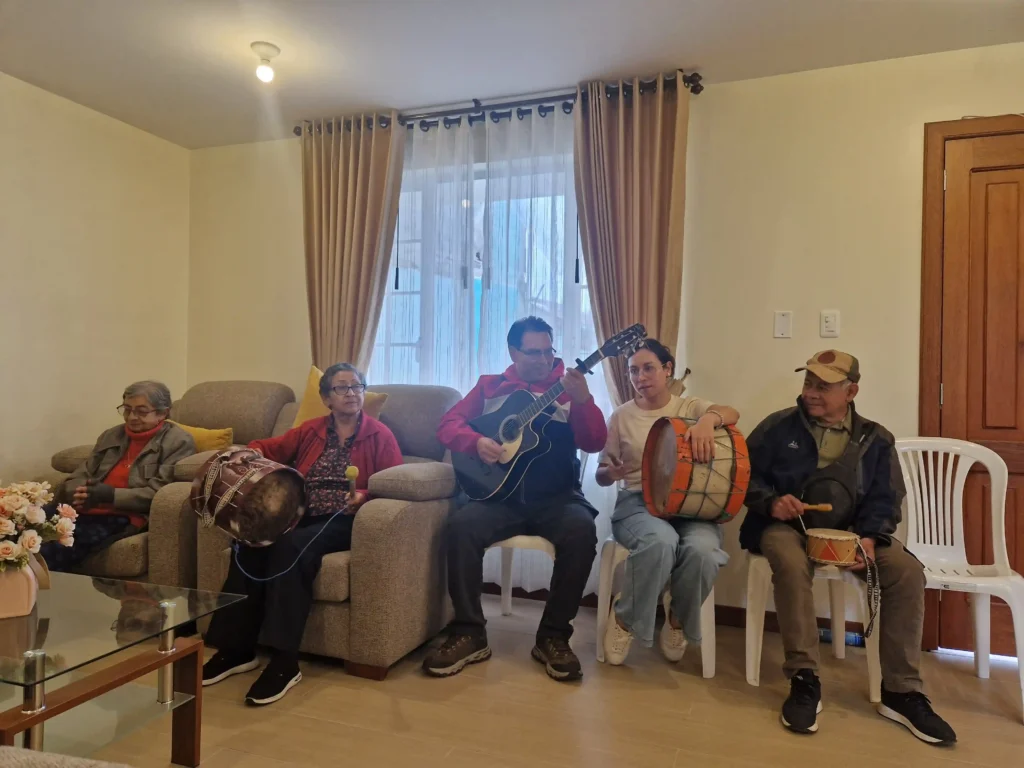
I do not wish to deceive you by creating a beautiful image of how wonderful being hosted by strangers is. In fact, the experience oftentimes can be underwhelming, neutral or somewhat unpleasant. But here is what happened to me in Ecuador.
I was hitchhiking near the town called Quevedo. My aim was to go around it, and travel towards the coast. Many cars that stopped were only going to the city, so I declined the ride. After about half hour of no success I went to the gas station across the road in hopes of finding truck drivers, who would most definitely be travelling further.
Suddenly, a concerned young woman approached me and asked me in English whether I needed help. I explained what I was looking for. She urged me to join her and her family. Apparently, Quevedo is considered to be the most dangerous city in Ecuador; a ruthless gang rules the town. She told me that they would drive me anywhere I needed to go, as long as I was not standing there alone.
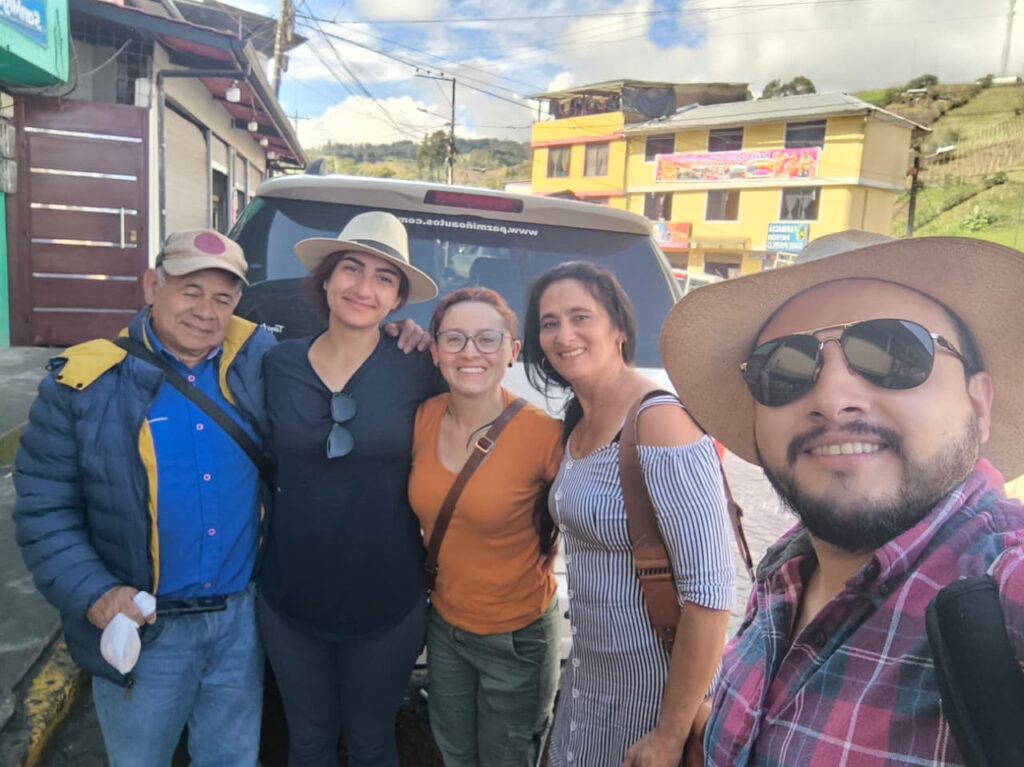
Ultimately, they invited me to go with them and arranged an accommodation for me for the next few days.
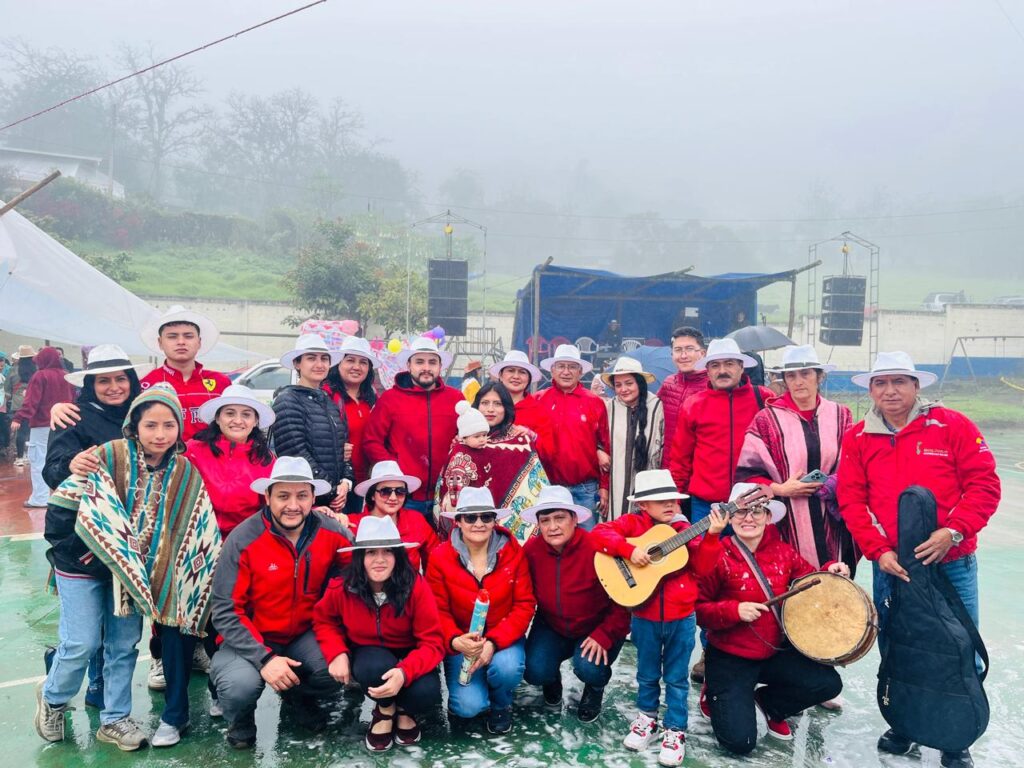
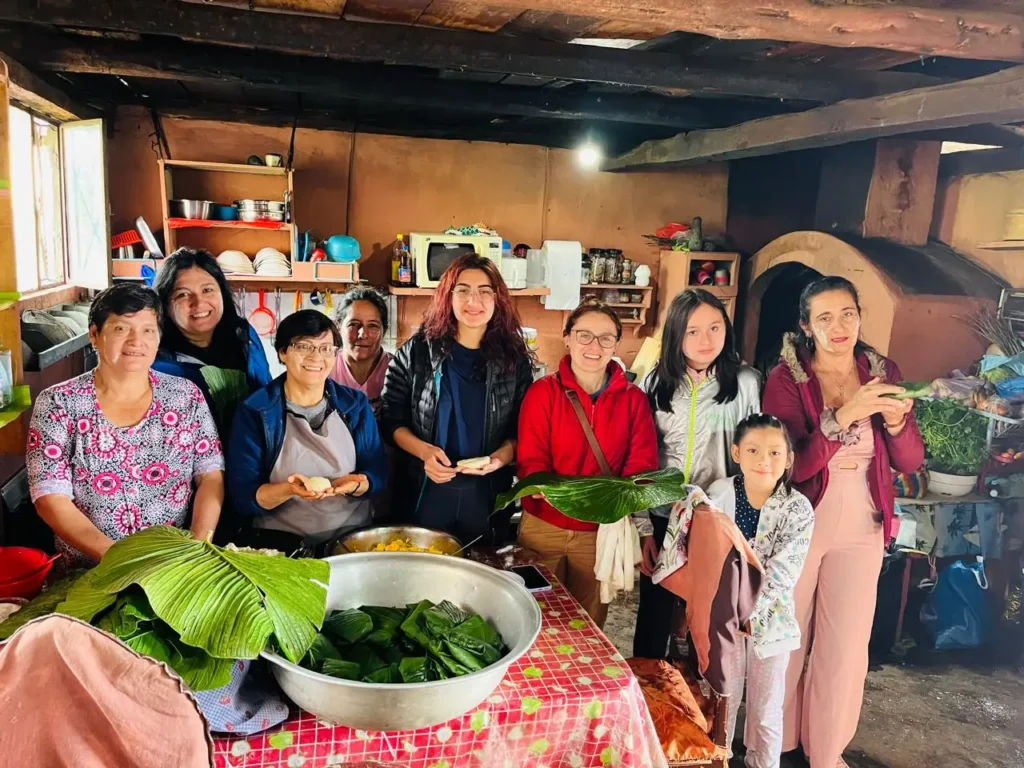
Natalie (the small young woman), her husband Alejandro, Nora and Alberto (her parents) were going to a tiny town called Chillanes. The entire country was celebrating the annual national carnival. The family of 40 to 50 people travelled all across the country for this gathering. And they welcomed me as one of their own!
Sleeping Outside
I have met people who do not mind and even enjoy sleeping outside. I am certainly not one of them. In my mind, the nights spent outside are miserable, cold and lonely; and the mornings after are even worse. The contrast between other people’s lives and mine is far too great. People are rushing to work, going on their morning jogs, sipping a cup of coffee at a café, while I try to make myself look as presentable as possible, shake off my misery and put on a false smile.
Inasmuch as such nights are always challenging and mentally draining, such experiences do deliver their share of benefits: primarily building one’s endurance and character. I still could not possibly enjoy these kinds of nights, but, as of now, I am barely moved by them.
In my 5 years of travelling around I have slept outside somewhere between 10 to 15 times, and on about 5 of those occasions it was my conscious choice not to bother with finding a place to stay. I have slept in an abandoned concert venue; on the rocks by the sea; at an abandoned part of a fortress full of human bones and dusty books; on a sofa at a police station; under a tree; at a gas station, and so on.
Although, while travelling this way every once in a while such nights can take place, the numbers speak for themselves: 5 years, (roughly) 1825 days, and only about 15 nights spent outside.
Not bad for travelling with no money.
Experiences of the Others
Kristian, my host in Denmark told me about his adventures back in 1980s. He was young and broke artist who struggled to make ends meet. His friend, who recently came back from a trip, advised to just take off and travel. He assured him that he did not need much money for that. Kristian thought it to be a good idea, so he hit the road.
This situation took place in Israel. Somehow he got to talk to one couple at a bar. It did not take too long after the encounter for them to invite him to stay with them. He even remembered thinking how lovely they were and how lucky he was to have met them. But upon arrival he quickly understood it was a mistake.
He said the house looked like some junkies lived there. Against his better judgement he decided to stay. Later that night they robbed him and kicked him out of the house.
A couple in Vilnius who hosted me and my friend for a couple nights told us their story. They were travelling through Estonia. Somehow they ended up in the streets without a place to stay for the night. In desperation they approached the first man they saw in the street and asked for shelter.
He immediately called his wife and she agreed to accept them.
They said the house was huge and the bedroom they were given was larger than the room where they lived at that moment.
The Most Hospitable Countries
The level of hospitality individually or nation-wise is best tested when one travels particularly in this way. When a stranger approaches one in the street and asks for shelter, there is nothing, but the set values and principles of the individual that compel one to assist this stranger.
The reaction to such question is as genuine as it can be. When people ask about my favourite countries, I use the criteria of hospitality and general openness to experience to answer this question.
In Europe the absolute champion that has proven its worth over and over again is Denmark. Danish nation seems to embody a perfect combination of individuals having a possibility to host and willingness to do so. The time that it takes to get a lift is rarely over half an hour, usually around 10-15 minutes; more often than in other countries people tend to invite a traveller into their homes; looking for a host is quite straightforward.
Two other nations in Europe that also keep the bar up high are German and French. Both countries have a rich cultural background; leading scene in philosophy, psychology and literature. People simply are more thoughtful and perceptive. French are particularly charming.
In South-East Asia Vietnam took an early lead, and no other countries were even close. Vietnamese people are capable of making any gringo feel welcomed. They often invite one for a cold beer; at times for their excellent Vietnamese coffee; or cooling coconut water.
The entire continent of Latin America made an indelible impact on me. I had a pleasure of staying with families for the most part, and I they always made me feel very welcomed and cared for. But my ultimate favourites are Chile and Colombia.
The Least Hospitable Countries
There is a mistaken perception that the southerners are friendlier than the northerners. I hear people praising Spain, Portugal, and Greece, saying how much they enjoyed being there and how friendly people were.
Dah!.. If you are a tourist who pays money, people will smile and try to make you feel good. They don’t have to like you or care about you in order to do that.
I’d spent two months in Spain, therefore, accumulated sufficient enough data on how people are. Which is they generally don’t care and they are arrogant. If you are a stranger in need, they won’t even look at you; and if they did, mostly in order to tell you off.
My time in Portugal was limited, but I broke my records there: 10 full hours of looking for a place to stay; a full day of hitchhiking and covering only 40km.
Another country where travelling this way can be rather challenging is China. I have spent a month in China and have not been hosted in a Chinese house even once. And it is the only country where I have slept outside while travelling alone (on all other occasions I was with another person).
But these countries will never match the most hostile country I’ve known so far – Greenland. I say hostile, because the question of friendliness cannot even be discussed. Greenlanders despise foreigners and on some occasions they will openly tell you that. One young man told me that he hates people like me.
”What kind?” – I asked.
”Tourists”, – he responded. Then he imitated as if he had tourists lined up in front of him and he was shooting them.
What makes the idea of looking for a place to stay so remarkable?
As I pointed out in a previous topic, when a person travels as a tourist and pays money for various services, their experience in inevitably different. For people at the hotels, restaurants, tour operators and guides – it is their bread and butter to be friendly and welcoming. There is nothing personal in it.
People who host me and assist me in any shape or form genuinely care about me, or genuinely pursue their self-interest of the moment. Therefore, the encounters are much more personal. Some people say that I remind them of their daughter; younger people who see point in what I am doing engage in long discussions or ask numerous questions; for some men my unexpected appearance becomes a pivotal point in their lives.
These instances are purely based on the human aspect. Thus, the true nature of humans, their true motivations, impulses, desires and needs are exposed; and I am the direct recipient of them.
Apart from having personal experiences and building up my understanding of the human mind, the act of approaching a stranger posing a socially unacceptable question is a unique experience that has an indelible impact on a person. It offers a new perspective, new way how to look at things and oneself.
Of course, ultimately, it is only a matter of priorities and what is one looking for in this life.
Pingback: The Innovative Ideas for Female Travellers - nomoneyyeshoney.com
Pingback: Little Woman in a Big Scary Afghanistan - nomoneyyeshoney.com