
Be Grateful
They say just be grateful for what you have got,
For the person you are, for good health and whatnot.
For the bright shining star that is over your head,
For the roof up above you, for the salt and the bread.
Evermore thank your parents for giving you life,
And then all your friends for choosing your side.
Say thanks to the man who picked the bag that you dropped,
And to that smiling young waitress, who was just doing her job.
Be grateful when stranger randomly offers you help,
Although you don’t need it, you can manage yourself.
Say thanks even though he has not done it for you,
He had his own reason, maybe even two.
And if you think you’ve said thank you enough in your time,
Don’t hurry to draw such conclusions just yet.
Some people won’t tell you what’s on their mind,
But they act like you will never come out of their debt.
Still. You can choose to be grateful for this and for that.
You can even tattoo the word on your hand.
But the nature of humans will not ever change,
The ego comes first, your needs are not in its range.
The Idea of Gratitude Is Fundamentally Flawed
The notion that we always have to feel grateful for anything in life is something each and one of us is well familiar with from our early childhood. We are told so by our parents, teachers in school, and society as a whole.
Ability to say thank you in the moments when we are supposed to is looked upon as a display of good will and manners, being polite and recognition of another party’s efforts.
In some Scandinavian countries feeling grateful for having as good of a life as one could possibly have in this world has taken a whole another direction. To some citizens of those countries sense of guilt for ‘having it easier way’ is not an alien feeling at all.
It seems that there is always a need to make sure that we have expressed our gratitude in sufficient enough ways, to show that we are well-meaning; to be always courteous, and make another person see that we have noticed their efforts.
It is a perfect kind of behaviour, an ideal that we all aspire for, and understandably so.
The issue here is that humans are far from ideal. In fact, we are far from optimal.
Expecting a spot on behaviour from a creature that is fallible by design is a recipe for a disaster!
Empathy is A Big Deal Here
In order to survive as species we have to be capable to be willing to help each other.
Extending one’s hand to someone who is in need of it, or being on the receiving end of such gesture is imperative for our mental health as well. It makes us feel whole, like we truly are part of something bigger, greater than our own limited selves.
An erotic novel by Marquise de Sade Justine, or The Misfortunes of Virtue comes to mind. It presents a very good example of a society that is devoid of morality and sense of togetherness. A young girl was unfortunate enough to have lost her parents early in her years. She proceeds to stubbornly follow the notions of virtue only to be slapped, beaten, burned and violated by immoral men she meets along the way.
Although, in the modern world we are arguably much further away from such behaviours, it seems to me that solidarity and empathy are still not the prevailing notions in our society.
With greater understanding comes greater responsibility. Yet, looking back at individual actions of people, empathy and compassion are being treated more as luxury, rather than a standard behaviour of a modern more understanding human being.
By feeling grateful and saying thank you to everything that comes our way, we only underline that it’s not a norm.
Because when something is a norm, it goes unnoticed.
We don’t feel grateful on everyday basis about government providing us with educational system, good roads, healthcare system, etc. do we? Because in a developed country it is not a matter of selflessness on the their part, it is a must. It is what defines a developed country.
Therefore, we hardly ever think about it, unless we witness instances when these norms are severely violated.
All People Are Different… Not
In almost five years of travelling I had an opportunity to speak to hundreds of strangers. They were all of a different personal and cultural backgrounds, understanding and belief systems.
Yet, despite these significant differences, there are notions in our society, which are so powerful and omnipresent that no matter where the person is from and what one believes in, these notions are present regardless. People repeat same things over and over again, seemingly without putting any thought to it:
You never know; all people are different; it is important to be grateful; everyone has their own opinion; taste is subjective; you don’t argue about taste; people change; when you will become a parent, you will know; it is dangerous for a woman to travel alone…
It is like listening to a broken record.
It is essential to point out that the way we think defines the quality of our lives and type of experiences we are having while alive. It is a self-feeding circle, and in order for some changes to take place, people must begin thinking differently.
Imagine, an average young woman, who thinks that ”travelling alone is dangerous for women” and that ”you never know”, begins to travel alone. Say, somewhere down the line something very unfortunate happens to her: she was either raped, or killed, or prostituted, etc.
What happens next?
The news spread with speed of light; the internet explodes over how dangerous the world is for a woman; some people come out furious and indignant over what happened. Fear and loathing triumph once again!
The perpetrators are labelled as monsters or animals.
The belief that woman can’t seemingly travel on her own without putting herself at a risk has been confirmed once again.
Here is a real story I heard in Ecuador.
My Experiences in a Nutshell
I, as woman who travels alone, have gone to men’s houses; have hitchhiked in sketchy countries; have slept in the same bed with a male stranger; did not run away from a man who claimed he was going to kidnap me; travelled through countries like Iran and Afghanistan by myself.
And not a single time I thought that something terrible was about to happen to me.
All the more, not a single time a man has done something I had no idea he had intentions of.
It is predominantly because I think that ”you virtually always know’’. And honestly, I could not care less that most men that I meet, due to my sex perceive me as a poor weak creature that needs help and protection; or as a potential opportunity to get laid.
What matters to me is what I do about it.
After all, as I pointed out – the way we think defines what kind of experiences we attract.
We Are All Selfish
In summer 2023 when crossing the border from Poland to Russia, Kaliningradskaya oblast’, Aleksey, a man in his fifties, picked me up. We had to wait for good two hours until we could go through the immigration process.
A lively conversation ensued during which we touched upon many curious topics. One of those being peculiarities of human nature.
Upon hearing my story he concluded: ”I see, so you just live for yourself”. I sensed a hint of judgement in his words.
I responded that we all live for ourselves regardless.
He disagreed, stating that family is the most important thing in life and once I will have my own children I will understand what a selfless act means.
I asked him what he meant by that.
He said something along the lines that everything he does, he does for his children and wife; that he would give his life for them; if anything ever happened to any of them, he can’t even imagine what he would do without them.
I told him that I totally understood his perspective, but ”did you notice how many times you used pronouns ”I” and ”my” in a few sentences that you just uttered?” – I asked.
My point was that, although he believes that his actions are selfless, they are, in fact, quite the opposite. In his own words he just said that his well-being largely depends on their well-being. Understandably so, it is in his self-interest that his wife and children are healthy and content.
”Ultimately, primarily everything you do is not about them, but you”, – I concluded.
He responded: ”Damn, I think you are right”. He told me that he never thought about it from this perspective, but it made perfect sense to him.
A Young Woman I met in Bulgaria
Once when I was hitchhiking through Bulgaria, a young woman, Jakki, picked me up.
Jacqueline was very glad to have met me, because finally she could get answer to her main question: ”Is it really that dangerous?” Without a doubt, what she heard from me was quite different from what she had imagined.
She was in her early twenties, seemingly quite curious, motivated and anxious to have various experiences in life.
But her lust for life was constantly squashed by an overbearing mother, who would always keep in touch with her and her sister anytime they were away.
One time Jakki went on a short vacation to Burgas, her mother called her every other hour. Ultimately, she told her that she developed a headache, was feeling unwell and was begging Jacqueline to come back home.
I understood that consciously or unconsciously she was manipulating her daughter. I presented this perspective to Jakki.
She agreed and added that such behaviour was putting her in a conflicting position, when she wants to enjoy life, but she also does not want to upset her mother.
The question I am pondering – why would a mother manipulate her own children, if not out of her own self-interest of feeling at peace? Just like in case of Aleksey – the well-being of her daughters is directly connected with her own.
She fails to handle her unjustifiable and irrational fear, and proceeds to put the burden of her shortcomings on her daughters.
A very selfless behaviour, indeed…
Men Are Very Good At This
Nature of my experiences as a female traveller is an epitome of humans acting in their own self-interest. Majority of my experiences in one way or another involve another man.
Anytime I had a problem I struggled to solve, there would appear my hero on his white horse ready to slay all the dragons, solve all my problems and take me to a save and warm place.
And I think I might know why.
I have concluded that men feel the fundamental need to take care of women, to protect them, and, well, ultimately, to fuck them. The last bit does not have to be present consciously, but it is there regardless.
It is remarkable what men are willing to do sometimes just to be in a presence of a woman.
Once during the period of a month I counted the amount of times single men have picked me up, hosted me, or put me up at a hospitality venue versus single (or more) women versus couples.
Respectively the numbers were as follows 36: 5: 6.
Coincidence?
In Patagonia on my way to Ushuaia, I encountered a substantial amount of hitchhikers on the way. I have never seen as many people with backpacks and their thumbs up by the side of the road as I did there.
Although, I was not the only one there, I almost had no competition. Drivers would pick me up first.
Once in Argentina when a man skipped on another male hitchhiker, but stopped for me, I asked him why me and not the other guy.
In an almost apologetic fashion he mumbled that normally he never picks up hitchhikers and he does not even know why he decided to stop for me. Then he added the general schtick that it is for safety reasons.
Feeling Grateful Can Be Harmful
Just the way the conditions of staying in a 5-star hotel significantly differ from a stay in a low-quality budget hotel, travelling without money significantly affects the conditions of the journey and is essentially whole another game.
The way people perceive and treat me is qualitatively different from the way they act towards each other. In my case, all my encounters depend on people’s individual values and principles, rather than thickness of my pocket.
As a consequence, I was able to be exposed to series of unfiltered, genuine human behaviours from up close and, consequently, to begin to understand the nature of human beings.
Social conventions and the generally accepted norms are of particular interest to me. I analyse their usefulness and influence upon individuals and society as a whole, as much as my understanding allows me to.
Therefore, I have contemplated our need to feel grateful for many years now.
Although, on the surface level it might seem rather innocent and even essential to feel grateful towards people around us, I begin to think that it can actually be rather detrimental both to the society and individuals for following reasons:
First of all, it creates societal pressure which can lead to unnecessary stress and anxiety.
The anxiety stems from the fact that we experience a need to keep up appearances, to act in a particular way that is not necessarily true in our own experience. (That in itself is a dangerous proposition).
If we fail to do so, we might have to face unwanted consequences: being perceived as ungrateful and selfish, alienated, and pushed away. In a long run it can result in loneliness, something that humans dread the most.
Second, it lowers our standards and expectations towards ourselves and each other.
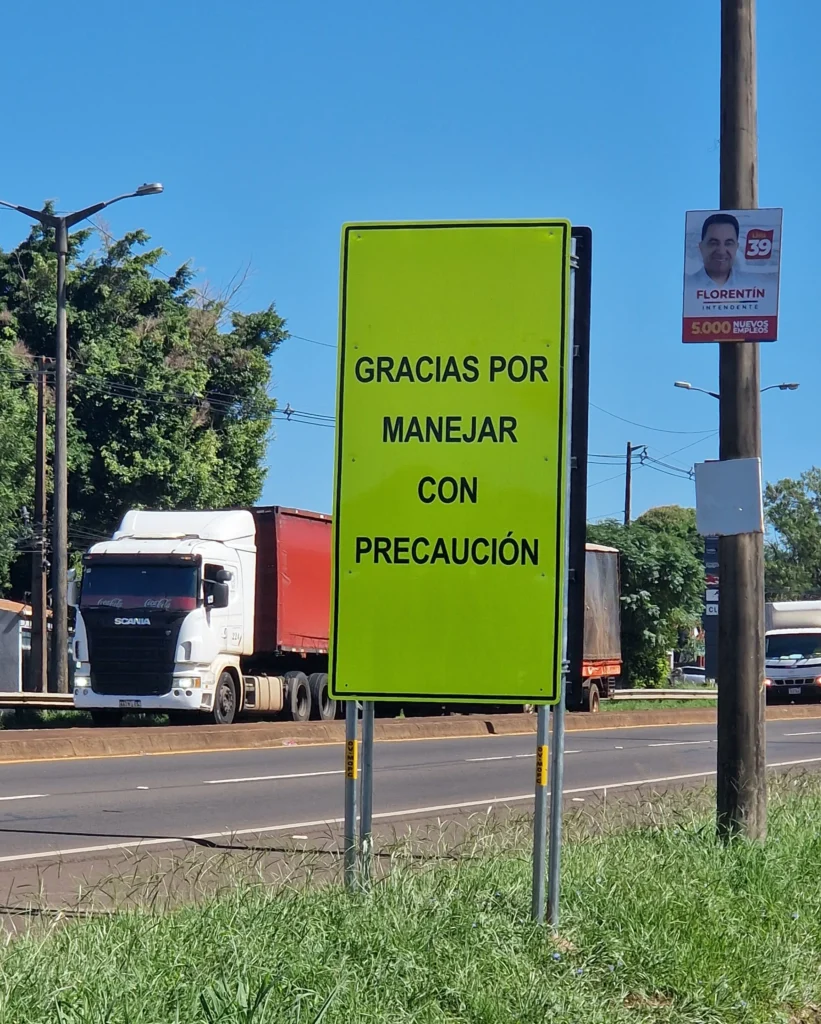
The absurdity we indulge in has reached the level when the government thanks the drivers for doing something that any sensible human being in their right mind must do when driving a vehicle – do it with precaution.
What is next?
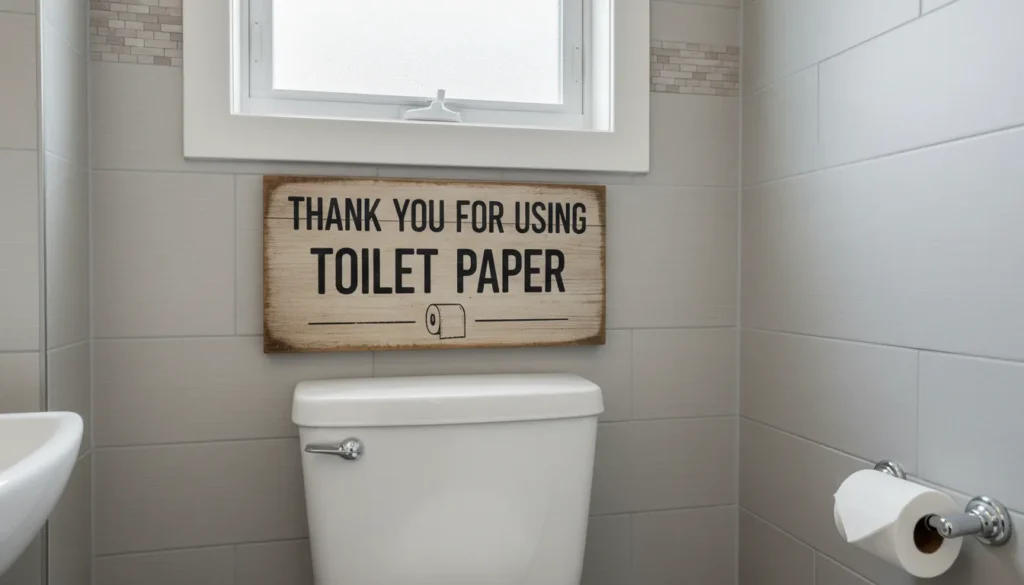
Or in other words, we begin to treat each other like retards, who should be rewarded with a good pat on a shoulder for doing something that is so natural and straightforward that it must not even be ever discussed!
Third, we fail to recognise the true horizons of our own potential.
Listen randomly to any acceptance speech that celebrities give when winning an award of some sorts. It is almost a given that this speech will be about how grateful they are to this and that person for their win.
”I would like to thank my parents, siblings, all my friends, my team, my neighbour next door and his dog, that always wiggles his tail upon seeing me, for this reward”.
When people hear that I (so far) have successfully dodged any obvious dangers that come with a woman travelling alone, they proceed to thank God for this, or all ‘kind’ people that I am ‘so lucky’ to have met on my journey. This way they take credit away from me and give it either to some supernatural powers (debatable), or people they have never met and have very little idea whether they are kind or not (also debatable).
While I happen to be consciously aware of my own input, and I can only roll my eyes over such statements, most people don’t seem to recognise their influence over their own success.
It is trues that we do require assistance from each other, but we must not ignore the fact that our success or failure are of our own making.
You reap what you sow – it is as simple as that!
Fourth, have you ever thought what does your ”thank you” actually imply?
Nobody wants to be branded as ungrateful. It is almost like being called a parasite that has accepted all the goodies, without giving anything back in return.
But what is it you are giving in return by saying ‘’thank you’’?
Imagine a simple situation: we are at the supermarket; you are right in front of me in line. Cashier scanned all your goods, and you find out that you forgot your wallet at home. I witness the situation; I think that the amount is insignificant for me, so I proceed to offer a solution to your rather basic problem – I pay for you.
You gladly accept my offer, promise to repay me and say ”thank you so much”.
What is it you just gave me by saying that, an affirmation of my actions? That what I just did was a ‘good’ thing to do? But I already know that, this is why I did it in the first place!..
Or are you ensuring your own self-interest here (first reasoning) and want to make sure that I and everyone around have acknowledged that you feel grateful?
*** I must point out that I do not oppose to expressing one’s appreciation in a situation like this one. I merely point out the hidden implications.
Fifth, as a consequence of constant feeling of gratitude we misrepresent and misunderstand each other’s motivations.
To continue the example:
If you keep your word and give me my money back, that essentially means that I did not gain or lose anything in this situation, apart from the fact that it felt good to be useful.
And if my emotional boost is the only factual consequence of this little encounter, it only proves the point – my action was designed to serve primarily my self-interest. You feeling good is only a by-product of my actions.
All our actions in one way or another affect people around us. So, it is only a matter of whether we choose the actions that benefit not just us but the others as well, or the ones that primarily benefit only us.
It Is Not Our Selfishness That Is Problem, But our Unawareness
As I stated before, humans are fundamentally selfish creatures, and we always have our own self-interest in mind. We cannot alter or supress our nature. We are who we are and the point is to understand it, to make peace with the fact that we are flawed and work with what we have got.
But in our world most people act as they feel like, rather than acknowledging which actions are the most optimal for them and the ones around them.
‘’Feeling like’’ does not entail a cognitive process. It means exactly what the definitions of these words are: feel – on the level of senses, emotions, feelings; like – something that only resembles something else; an approximation; something that is not exact, but close to the truth.
Yet, the phrase is being used as equivalent to ‘’I think’’ on regular basis. But it is not the same. The result is not the same either.
As a consequence of such attitude, millions and millions of people do things they have very little clue of why they do them.
Doing something for another person, while having a clear picture of what is it that we get out of the situation is what differentiates an ignorant selfish person from a cognizant one.
Get the gist?
Doing Something for One Another Is Not a Big Deal
Extending one’s hand and expressing solidarity to a person in need is a perfectly human, natural, reasonable thing to do. And we must treat it as such – not a big deal, just doing one’s own duty and assisting a fellow human being.
The situation I described above is a fine example of showing basic solidarity. We must not underestimate how powerful can be the effect of a little bit of help from a relative stranger in the moments like that.
And it is a win-win situation, because as we already concluded, all parties involved, ultimately, feel good.
Such approach to our actions creates more harmonious and balanced social dynamics. And in such society individuals have greater opportunities to thrive.
Conclusions
Everything is connected in life. The point is to know it and to understand it.
In other words, nothing ever happens for no reason and everything has consequences.