
The idea of a person travelling without money has bewildered just about everyone I have met on my journey.
– I don’t believe you, you are lying! – exclaimed a young Polish journalist I have encountered on my way from Poland to Kaliningrad. From his childlike baffled facial expression I understood that he was not really calling me a liar. He just could not fathom how on earth one could survive without money.
What could I have told him but the truth? Of course, it is possible.
Everything is possible within the realm of reason
In this day and age when the world has never been as connected as it is today, travelling has become a widely popular activity. It is particularly enjoyed by the citizens of well developed countries. In the third world countries travelling is a luxury. It implies not only the pleasures of having to visit other countries, but also a higher social status.
But even in the countries with better economic conditions people name lack of funds a limiting factor. Transportation, visas, hospitality establishments, food, some leisure activities and tours – all cost money. To many, this obstacle seems to be insurmountable. Such a conditioned way of thinking creates a phantom world in which value of an individual is calculated proportionately to the amount of money one possesses.
With some help and guidance I learnt of the alternate ways, which enabled me to travel for years to come.
How I am able to travel without money. Easy-Peasy!
Travelling without money creates conditions in which one must begin to think in different ways. Under these conditions, solutions to everyday problems are rather straightforward and simple.
For example, I hitchhike and hike in order to move forward. I look for people who would be willing to host me. That accounts for my superficial needs, such as safety and basic comforts. And more complex one’s, such as human connection, companionship and understanding. If I need a very particular thing, I look for it straight up. If someone offers something I do not need, but I anticipate that I might in the future, I accept.
Ultimately, it all comes down to recognizing one’s own needs and finding ways how to accommodate them. Easy-peasy, right?
Hitchhiking
In my years of travelling I have visited about fifty countries (and I am still on the road). Some of them three or more times. To all of them, with one exception, I have hitched my way. The distances I have covered in these years could very well be somewhere between 150000 to 200000 kilometres.
Since I travel all year round, the conditions in which I had stood by the side of the road vary. I have waited in a sweltering heat, in the temperatures as low as -15 degrees, in pouring rain. At times I had waited for less than a minute, at times for hours. My longest wait was five hours.
Although, hitchhiking has been continuously demonized in the western world the reality can be quite different from the common perception. In fact, it can be rather flexible, reliable, and efficient way of transportation.
Once I made a bet with my Albanian host. He deemed it impossible to travel from Shkodër to North Macedonia, Greece and arrive in Turkey in three days. The competitive spirit kicked in as soon as I left him. In two and a half days I was in Turkey.
On another occasion I had to travel from the town Västervik, 300 kilometres south of Stockholm. Go around gulf of Botnia, down to Helsinki in three days. Once again, I was successful in my quest.
What To Expect While Hitchhiking
The entire concept of hitchhiking is based on a simple principle – people assisting other people. Since there is no monetary incentive, this mode of transportation delivers great sense of liberation.
Not only one is able to travel wherever and whenever one wishes to. The entire voyage happens on person’s own terms: no more strict rules to follow; no timetables to adjust to; few limitations in terms of luggage; and no frustrations concerning occasional errors while purchasing an online ticket.
Hitchhiker is even free to choose which car to get into, and which one to pass on. Furthermore, every now and then your ride might treate to a meal, a cup of coffee, or give a little excursion around the area.
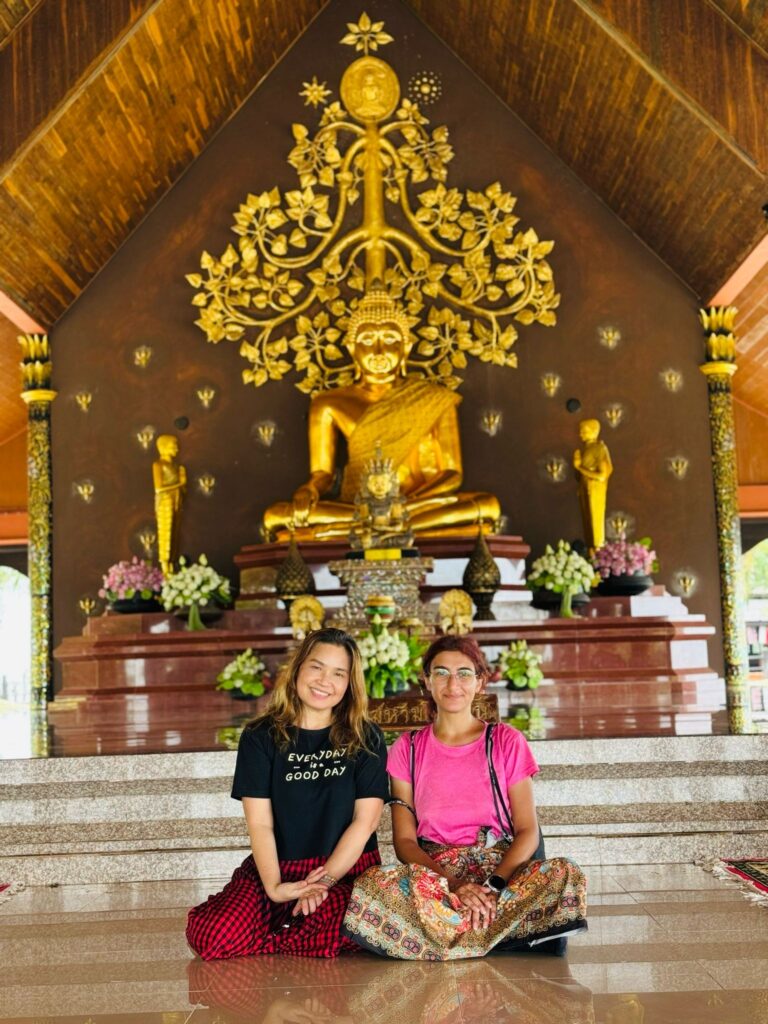
Or maybe your ride invites you over
Another delightful possibility while hitchhiking is a chance of being invited into someone’s home.
Once in Malaysia I was picked by a young girl. She was driving about 250 kilometres in my direction, towards Kuantan. Soon after I got into her car she asked whether I would like to stay with her family. She added that in two days they will have a big celebration with two to three hundred guests arriving. It was her brother’s wedding anniversary. It is the day when Malay people celebrate the wife as a new member of the family.
I rejoiced at the offered opportunity to witness display of local customs and traditions. For the next two days I participated in the entire process of preparation for the big day as much as I could. I helped decorating the house, cleaning up, cooking, last minute shopping, and making little gifts and treats for children.
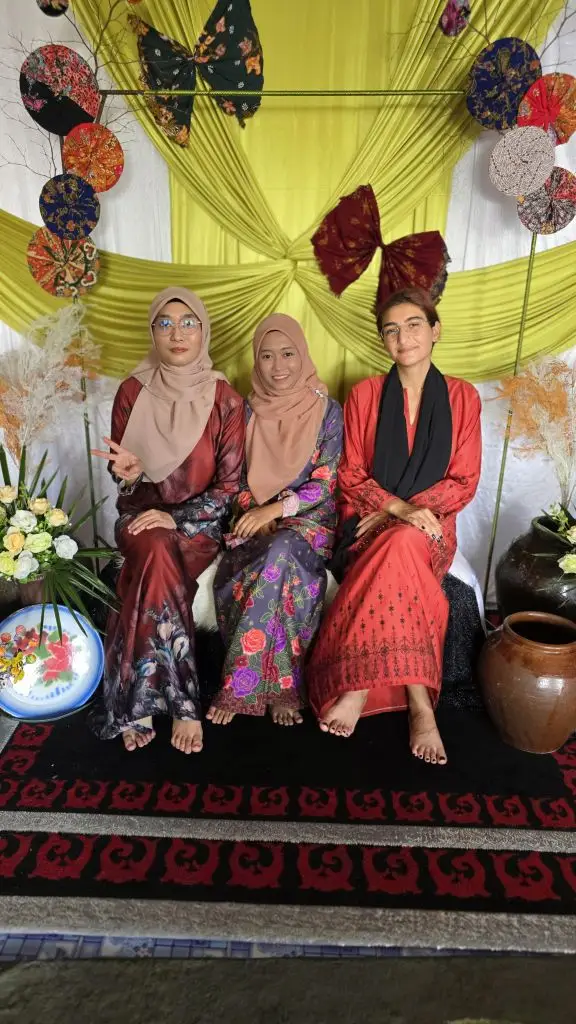
Hitchhiking is an experience worth having
All in all, hitchhiking is one of the experiences that undeniably can deliver a fresh perspective. Especially now when people have grown increasingly frightened and suspicious of one another.
Of course, the risks that are being continuously talked about do exist, and they must not be ignored! But if done smartly enough, the odds of anything happening at all are not significantly higher than of a predictable day from a conventional life of an average citizen.
Sustenance
The only time when I had to struggle because of lack of food was in the beginning of my journey, when I arrived in Belgrade, Serbia. I had no money at all. I was volunteering in a hostel, and food was not part of the agreement. Occasional snacks, coffee and tea with sugar – were my only ration.
One evening I went out for a walk in Kalamagdan Park. A stranger began talking to me. I welcomed his effort and the conversation ensued. In the middle of the walk he asked whether I was hungry. He offered that we got some local burgers (pleskavica) and fries. I acted as if I was only mildly interested in his proposal. I did not want to seem too eager, but I was salivating from the mere prospect of eating that precious succulent burger.
After several days of starvation, I got an idea – asking the restaurants in vicinity for some leftover food. Soon enough, one was found. They would give a portion of a meal which they cooked for the employees.
But, ultimately, in the first three weeks in Belgrade I lost all the kilograms I had gained during the pandemic.
Food is almost never a problem
Apart from this particular instance, there have been occasional days of fasting, but never true hunger. Food and water are the fundamental needs of any living being. Instinctively people always ask me whether I would like to eat or drink something.
In countries, such as China, Vietnam, Thailand, where food culture is so prevalent, almost everyone inquires whether I have eaten. Sometimes people take me to a supermarket where I am free to get whatever I wish. Often times to a restaurant or an eatery. It usually happens so naturally that I never really have to think about food.
In other words, while travelling without money one can hardly ever go hungry.
Also, leading such a lifestyle helps improve one’s physical and mental endurance. So the days when food is scarce are of no particular bother to me.
Hosting
Travelling without money was not a force of circumstance, but rather a choice. the sole purpose of this choice was my individual development. In other words, without money I would have to think differently; find creative solutions to my problems; become more resourceful and capable; and learn how to pick the right people and situations I find myself in.
In the beginning even when I had a little bit of money, I would still act as if I did not, in order to discipline myself and develop new set of skills.
The amount of people who are capable of hosting a stranger unexpectedly, is utterly small. But by no means it is impossible. Whenever I arrive to a new city, a town, or a village I walk around and look for a person, who would be willing to have me as a guest. The success rate is close to 100%.
Looks never deceive
A simple, but effective mechanism helps me in my search – reading people. People often say to me that appearances are deceiving, or ‘you never know’. It is actually quite the opposite – looks never deceive. With a little bit of observation and analysis of the information at hand it is possible to build an accurate picture of a person and predict their response.
When walking in the streets of a city, I approach not just anyone, but only select type of individuals, whom I believe to be the best candidates for this cause.
I pay attention to person’s overall appearance: how the person is dressed; how clean he/she is; his/her facial expression, especially the eyes; person’s gait, and all sorts of smaller details, like the colour of clothes, hairdo, tattoos and piercings if present, etc.
Overtime various patterns and general categories of people established themselves. For example, artists and musicians tend to be quite responsive and curious; people who look posh and who drive expensive vehicles, for the most part are quite unapproachable and disinterested.
Simply put, I must have an answer to two most important questions, once I look at the person: ‘How would he or she respond to my question?’, and ‘Would I feel relaxed and safe enough in his or her house?’
On a few occasions when a person extended an invitation on their own accord, I turned it down exactly because the answer to the second question was negative.
I can find a host within minutes
By now, in some situations I don’t even have a need to look at the person’s face. Just one’s silhouette and the manner of walk is enough to understand whether I must approach the person or not. The decision ‘ask or not to ask’ comes within split of a second.
This process can be as quick as couple minutes, or it can last for hours. I had an experience in Bern, Switzerland, when I had to look for a host there twice in a row, and both times the first person I asked invited me to stay with them.
On the first occasion, the very first young man that I chose to ask ended up hosting me for six days. After I left his place, I understood that I wanted to stay in Bern a few days longer. Again, the first people I approached and asked arranged a place to stay for me for four days.
But, say, in Faro, Portugal I looked for a host for full ten hours, and failed in finding anything at all. So, I ended up sleeping in the bushes for a couple hours.
Such instances are incredibly rare. Although the odds are so small, I am always aware that the possibility of staying outside is on the table.
So, is hosting a stranger real?
The statistics are such that out of 365 days in a year, I have only a handful of not quite comfortable, but endurable nights. In such cases I have to sleep on the floor of some local government building, celebration venue, or a cabin of a truck.
For the most part I always have a soft and warm bed or a sofa, hot running water, possibility to wash my clothes, and engage in relaxing activities, such as watching a film, listening to music, reading a book, or cooking for my hosts. All of that is for 0.00 USD.
Exploration of the countries and leisure activities
My journey could be characterized in a following way – there is always a general plan of where to go and what to do, but from day to day basis I improvise. A lot in the former case depends on the situations I find myself in.
This summer I was in Ho Chi Minh City, Vietnam. I had to travel all the way to Mong Cai, near Chinese border. For hitchhiking purposes I chose the fastest route that connects Ho Chi Minh and Hanoi. On the first day of that trip a businessman picked me up. He exports chili pepper to Japan, China, the US, etc. He was driving north via slower, mountainous road.
My initial idea was to get out in the next hundred kilometres or so, and proceed with the original plan. I needed to travel as quickly as possible. But he offered me to join him. As he put it ‘to experience the ways of chili farming’. He said that I ought not to worry about anything at all, for I would be his guest and that he would cover all the expenses.
The prospect of having four consecutive relaxing days of visiting chili farms, exploring other parts of beautiful Vietnam and not having to think about accommodation was too tempting to turn down. Ultimately, instead of travelling the route chosen in advance, I visited provinces and towns I might not have ended up in in quite some time.
Oftentimes my hosts show me around
Two summers ago I was in the western parts of Norway. I was heading from the Russian border down south to Kristiansand. I wanted to hike in the mountains. But I had very little time to conduct a research and choose a route for myself.
So, one evening I ended up in a small place east of Bergen. I found myself a host, a Norwegian man of Indian descent. He told me about a place called Trolltunga. An enormous piece of rock that extends out in the air, providing a magnificent view of the fjord and mountains around it. Conveniently enough, the beginning of that hike was only about 10 kilometres away from where he lived. He offered to drive me there in the morning.
The view was truly grandiose: the mountains – motionless, mute giants; the fjord – dark blue waters of calm and still; the sky – clear and sunny, with only a few clouds shaped like dwarfs.
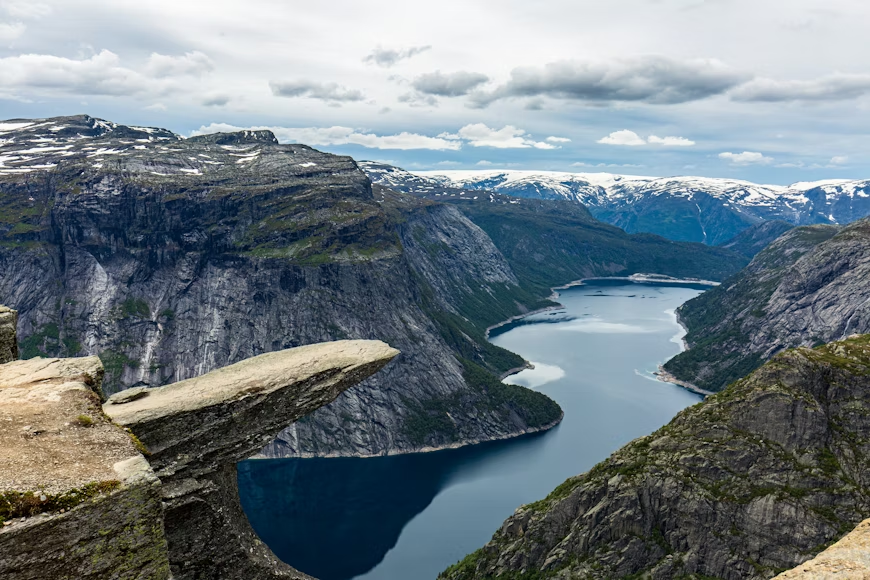
This hike had satisfied my need for physical activity and spending sometime on the nature. My host went to a greater length and took me on a road trip around the area. He showed me Folgefonna glacier which, apparently, in the past few decades has shrunk, losing the third of its volume. But is still used as a ski resort.
It can be challenging to know where to begin
Knowing what to do in a country you have very little conception of is not easy. That explains prevalence of various platforms where other travellers share their experiences and suggestions.
Personally for me a local person is the best guide a foreigner could have. They usually know where the best food is; they know the history of the area; all the picturesque locations, and so on.
Moreover, experiences shared with local people tend to be more personal. As people are more invested. Therefore, they expect no money out of a traveller. The transaction is far more natural and harmonious.
Conclusion
Everything is possible within the confines of reason!
With or without money one thing is clear – it takes some hard work to be able to travel the world.
Choose your own poison.